
20+ years
Specialty retail expertise
6 Countries
North America, Europe & Australia
1,000+
Retailers trust dakis every day
1 Platform
online + in-store + lab + services
A point of sale, a webstore, a print ordering system, a payment processor, and the tools that came after. Each one chosen because it does its job. Each one of them holds a different version of the same day.
the challenge
How camera stores and photo labs run today

Customer history split across systems
In-store purchases sit in the POS and print orders sit in the ordering system, with no reference between them. Your staff only sees part of the customer history.
Inventory manually entered twice
The POS and webstore each carry their own inventory. Every delivery is entered twice. A sale in one system does not reach the other, and counts are reconciled by hand.
Trade-ins listed one channel at a time
Used stock taken in at the counter is entered into the POS and priced for the shelf. Reaching buyers beyond the store requires listing it in the webstore manually.
Payments settling in two places
Online sales run through one processor and counter sales through another. Two portals, two settlement reports, and totals must be matched manually at the end of the day.
Online orders invisible at the counter
Orders placed online sit in the webstore, and the counter runs on the POS, which holds no record of them. Confirming a collection means opening a second system.
A new hire requiring three logins
Seasonal staff require a login for the POS, another for the ordering system, and one for the webstore. Answering a question about an order means learning where to look in each.
Customer history split across systems
In-store purchases sit in the POS and print orders sit in the ordering system, with no reference between them. Your staff only sees part of the customer history.
Customer history split across systems
Online sales run through one processor and counter sales through another. Two portals, two settlement reports, and totals must be matched manually at the end of the day.
Customer history split across systems
The POS and webstore each carry their own inventory. Every delivery is entered twice. A sale in one system does not reach the other, and counts are reconciled by hand.
Customer history split across systems
Seasonal staff require a login for the POS, another for the ordering system, and one for the webstore. Answering a question about an order means learning where to look in each.
the solution
What unified commerce means
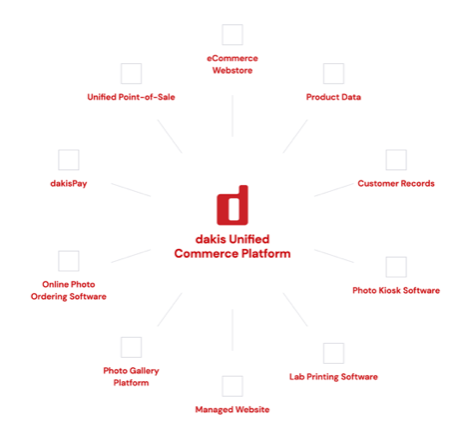
Unified commerce is one platform behind everything you sell. One inventory, one customer record, one place where the day reconciles.
One complete customer history
The camera bought in store and the prints ordered online sit within the same customer record. Your staff sees the complete history of in-store and online purchases.
Inventory entered once
Stock is entered once when it arrives, and every sale at the counter or online comes off the same count.
Trade-ins live where buyers are
Used stock priced at the counter appears on your website without a second manual listing step.
Payments in one place
Online and counter sales settle through the same processor and report in the same place. Nothing to match by hand at close.
Online orders at the counter
The order placed online is waiting in the system the counter already runs on. Confirming it and closing it happen in one place, on one screen.
One system, one login
The new seasonal hire learns one system. A question about an order, from any channel, is answered on one platform.
beyond integrations
What about integrations
Most businesses running more than one system have already tried to connect them. An API between the point of sale and the webstore. A connector moving orders into the lab software. A nightly feed updating inventory.
dakis has built these. We run full integrations with Lightspeed and have helped retailers work through API connections they had already invested in. They work, and for some businesses they are the right answer.
What they do not change is that there are still two systems. An integration moves a copy of a record from one to the other on a schedule, and between those moments the two disagree. Someone usually finds out when a customer does.
Two systems can be made to agree. One system has nothing to reconcile. Unified commerce is one system behind everything you sell.
Proof
Businesses running on dakis
CASE STUdY
Fitzgerald Photo
We build forward-thinking solutions that keep your business ahead.
Read the story →

CASE STUdY
CCPS
Scaling custom photo products and dellvering faster tumaround with dakis.
Read the story →
CASE STUdY
Sharp Photo
Automating production workflows and improving the customer experience.
Read the story →
Frequently asked questions
What is the difference between omnichannel and unified commerce
mnichannel connects the channels a customer sees. Unified commerce puts them on the same system, so the inventory, the customer record, and the order are one thing rather than several kept in step.
Can a general ecommerce platform do this?
It can sell. What it does not give you is the vertical.
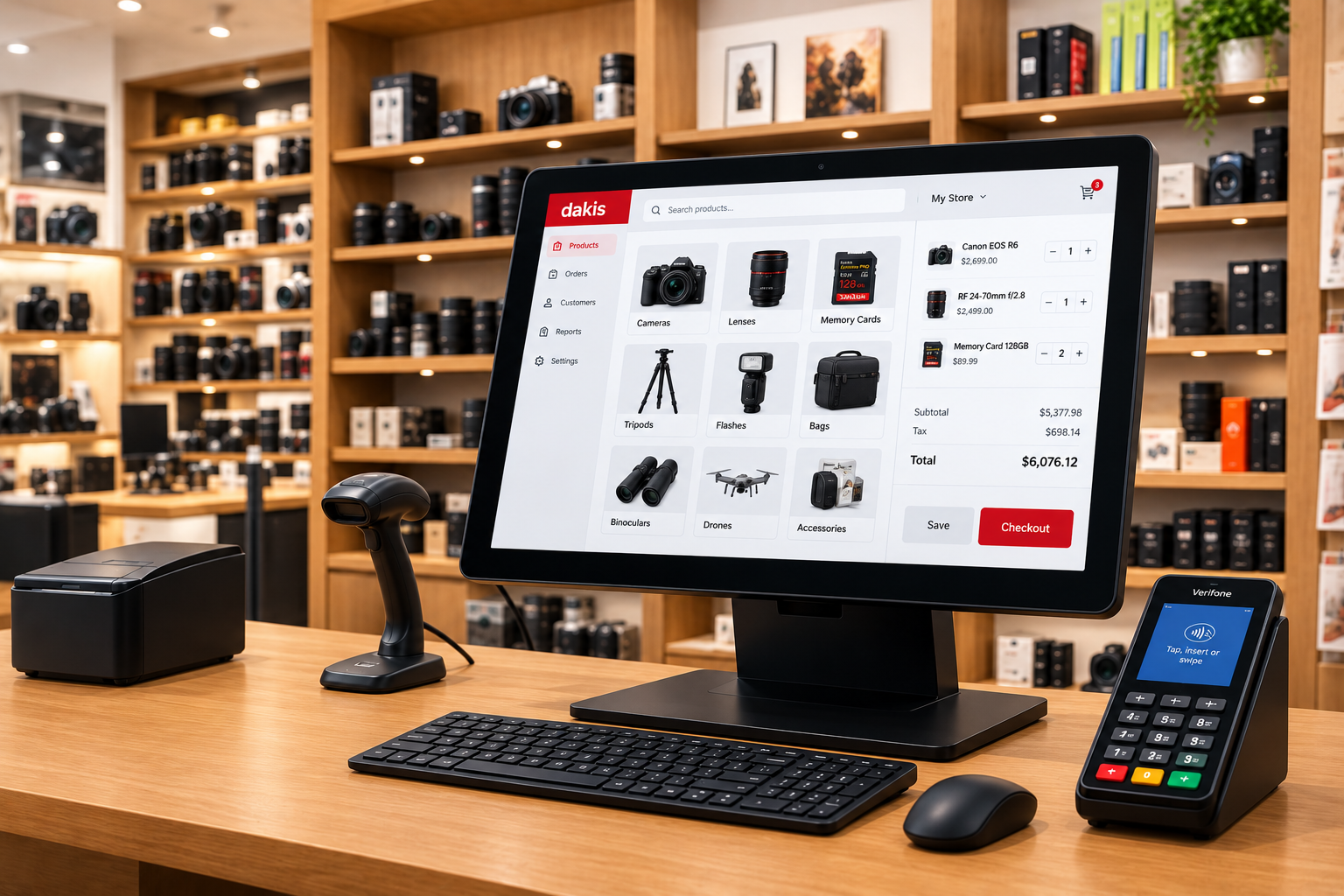
A camera store carries thousands of products with specifications a buyer compares before deciding, and a general platform hands you an empty database and an importer. dakis maintains those records as [Product Data]. Manufacturer rebates change on the manufacturer's schedule, and [Managed Manufacturer Instant Rebates] keeps them current at the counter and online.
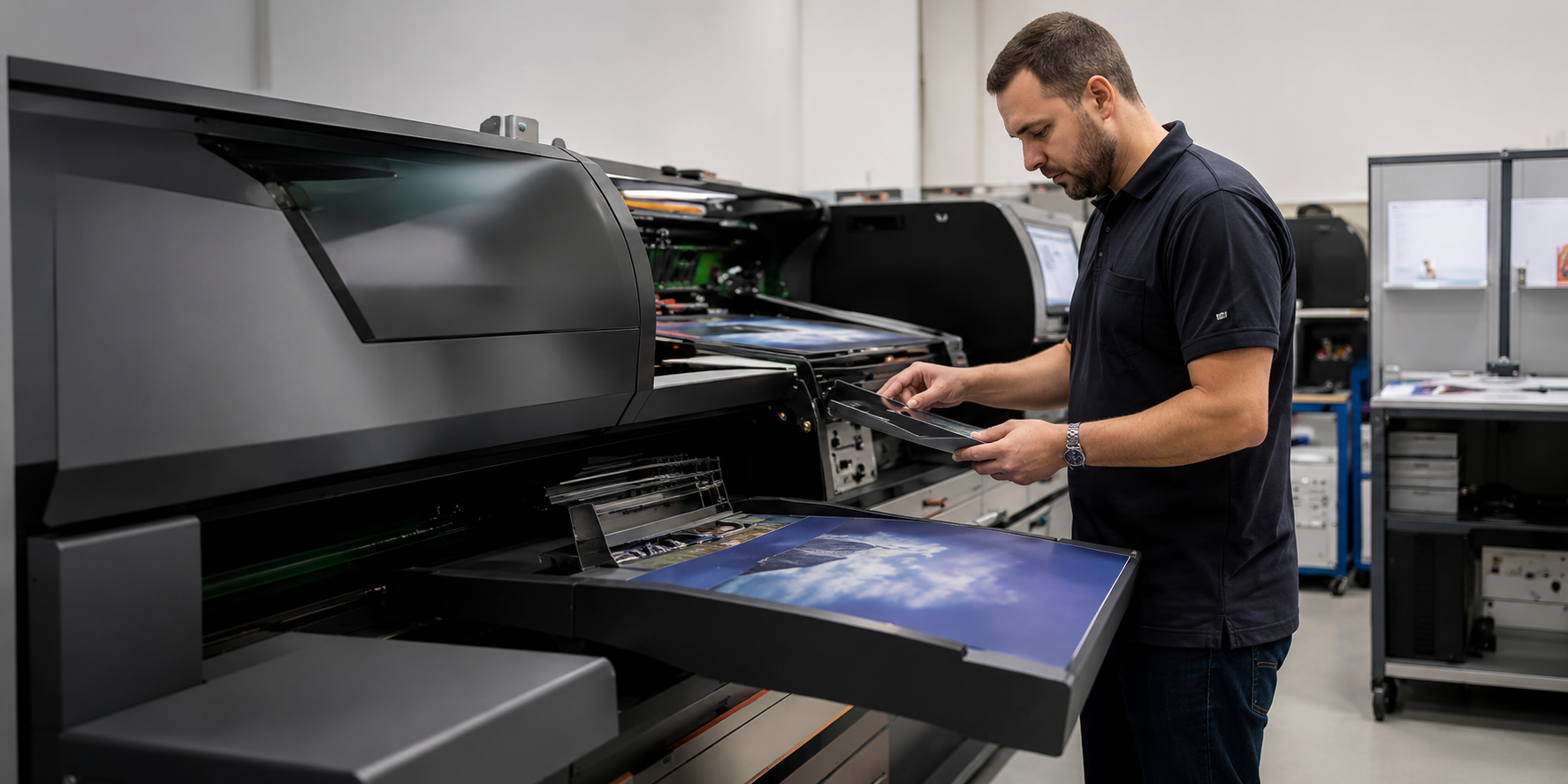
A photo lab needs a print order to carry its paper, size, and finish through to the machine that produces it. [Lab Printing Software] routes each order by product type, and it works without a connector because the order started on the same platform.
I already have integrations. Why would I change?
Integrations work, and dakis has built them. What they do not remove is the second system. A connector moves a copy of a record on a schedule, so between those moments the two disagree, and every new product type or channel means the connector is reconfigured. If your current setup holds, keeping it is reasonable. The question is what it costs to maintain as you add channels.
Do I have to build the product catalog myself?
No. dakis maintains product records for cameras, lenses, drones, printers, studio gear, frames, and accessories, built from manufacturer data. A product activated once is available at the counter, on the webstore, and in the ordering pages.
Can you move my products and customers from another platform?
Yes, through [Onboarding Services]. *** dakis team to confirm what transfers, what happens to the systems you keep, and whether the current setup keeps running during the move.
How long does it take to get running?
***To be answered by the dakis team.